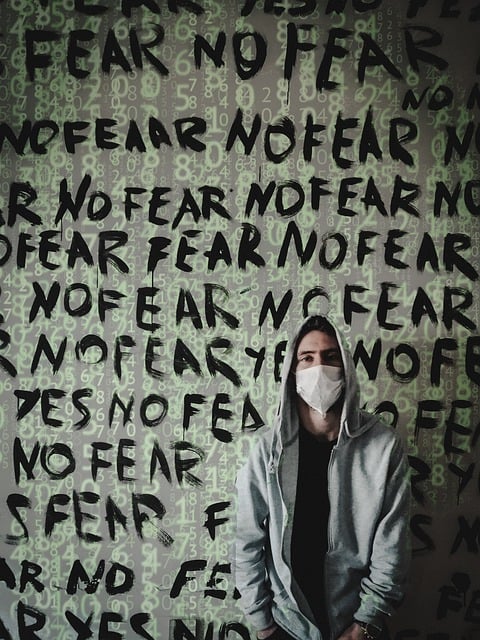

“So, first of all, let me assert my firm belief that the only thing we have to fear is … fear itself — nameless, unreasoning, unjustified terror which paralyzes needed efforts to convert retreat into advance. In every dark hour of our national life a leadership of frankness and of vigor has met with that understanding and support of the people themselves which is essential to victory. And I am convinced that you will again give that support to leadership in these critical days.”
– President Franklin D. Roosevelt, 1933 Inauguration Speech.
We’ve all heard that famous opening sentence, paraphrased many times throughout the decades (indeed, it’s getting pretty close to being 100 years old), most often truncated to “we’ve nothing to fear but fear itself.” That always seemed to a much younger me to be a weird statement. “There are lots of things to fear,” I would think. At the time, I was freaked out by spiders, my parents, the boogyman (whatever that was), the devil, nuclear bombs, the Russians, all of which I think might be pretty common for children at that time in history. But as I got older I began to understand.
Fear messes us up, in body, mind and Spirit. The fear response (which most of us know as “fight, flight, or freeze”) starts in your amygdala – almond-shaped and -sized structure of your brain’s limbic system where our instincts, emotions and certain memory functions live. It’s there to sense danger, and spur the body into action to avoid it or meet it head on. The amygdala is essential to our survival.
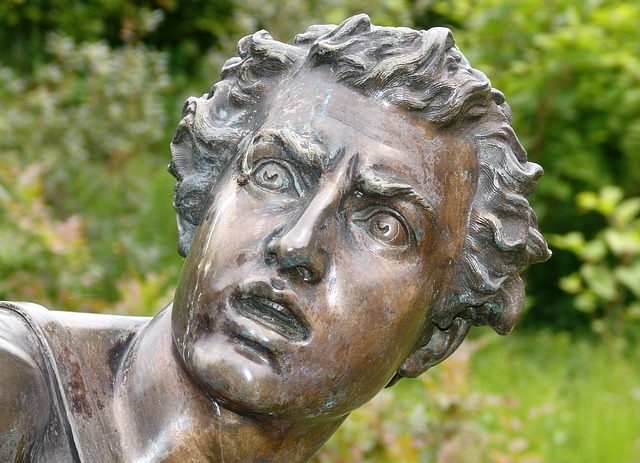
When your amygdala (there are two, amygdala is singular or plural) senses a threat, it sets a complex reaction in motion. It releases stress hormones, readying motor responses, engaging the sympathetic nervous system and signaling the hypothalamus, prefrontal cortex and hippocampus to do their jobs to decide whether the threat is something that requires further action. And, of course, this all happens within seconds. You may experience it as quickened breath, pounding heart, sweating, “goosebumps,” a definite and recognizable “fearful” look on your face (see illustration, below), possibly an involuntary gasp or scream – these “symptoms” are rapid onset and familiar to anyone who was ever presented with a pop quiz in school.
Some may find it enjoyable when a brief, one-time fright gets our fear response going, such as a jump scare in a movie or a friend poking you from behind in a fun house, or seeing those blue lights flashing in your rear view mirror and wondering if they’re for you (well maybe not that last one, but the sense of relief when the car passes you on the left is nice). Once the “life or death” (because that’s how it feels to your body) situation passes, your body goes back to its normal state. In fact, that adrenaline rush is why some of us choose to experience the fear response occasionally, in a controlled environment such as a movie theater or amusement park. It can be fun when we have the feeling then let it go. It’s knowing that we can control the situation – that it will be only be scary for a moment, that there’s no real danger, and confidence in our awareness of the lack of real threat – that determines whether we perceive the experience as fun, or not so much.
But what about long-term fear, or fear caused by circumstances over which we have no control? What if the scary situation becomes a day-long, month-long, years-long or even life-long stressor? The body literally just can’t handle being on high alert all the time. So it starts decompensating, bit by bit, sometimes so gradually that we don’t even realize it. The constant stress on our body’s systems and function – often called Post Traumatic Stress Syndrome or Disorder – can cause problems in the heart, the digestive organs, vascular system, muscular system, brain functioning, and overall psychological and physical wellness. It may cause heart palpitations, anxiety, loss of sleep or appetite (or eating more than your body needs), vomiting, trembling, “brain fog,” headaches and muscle aches, panic attacks, and so much more. Psychosomatic illness doesn’t mean it’s all in your head – it means what’s happening in your thoughts and emotions is having a very real and profound effect on your body. And it doesn’t have to be a prolonged period of fear that will set off the spiral toward illness of the body, mind and Spirit. It could be one terrible traumatic event – it’s the sense of control over the event that tips the balance between fear being fun or devastating.
Kind of like my full-body clench.
Last year I went through a battery of tests for two different weird things that were happening in my body. I had pain in one small, finite spot in my head (“not a headache,” I kept explaining to various care providers I saw – “a pain in my head – you know, like my cranium – kind of my scalp, but not through the bone to the wrinkly gooey stuff. HEAD pain,” I would say over and over again as they stared with that set mouth and faraway look), and pain in one particular spot beneath one of my breasts. I had had the pain for months, pretty continuously, and it wasn’t going away. It was mainly on the left side of my body – the yin side. I had multiple tests, including specialized mammograms and an ultrasound on my breast and an MRI and CT scan of my head, all of which produced nothing but suspicious looks from doctors who I’m sure were convinced I was either a hypochondriac, a Munchausen’s patient, or just “looking for attention.” They found nothing wrong.
As I was discussing it with one of the mammography techs, she said, helpfully, “Well, judging by where you’re pointing to, maybe it’s muscular/fascial.” She cared enough, and took me seriously enough to float an alternative to worst case scenario, and in an instant I realized she could be on to something. I had been in terrible stress – sometimes abject terror, especially most recently – since the election, and when I’m stressed, I tend to “clench” my body. Not just my jaw and teeth like most people. My whole body goes into flinch mode (old reflex from when I was a child). My muscles had, for the past few months, building on the training of many years, been in constant “fight or flight” mode – literally coiling up for the spring in either case. It made sense now that I realized that the only thing that would ease my head pain was to massage my scalp, and same for the muscles under my arm and breast. My body, in its wise, ancient, instinctual (albeit with a bit of overkill) way was doing what it was programmed to do, and was suffering for it.
I realized then that the only thing that I could do to reduce my own suffering was to… relax. Let it go. Stop flexing. Stop fearing. Stop reacting. HA. Good luck with that, right? But it was the only way. So I reminded myself of the coping mechanisms that exist for all of us. It’s the reminding part that is most important. I can’t get so caught up in the fears in my head to forget that I have control, if not of the situation, at least of how I react to it. I can turn off the tv, step away from social media, avoid people, even friends and family, that set off my anxiety response. I can read some of my books about mindfulness – Thich Nhat Hanh and Pema Chodron are very helpful resources for me, and may be for you, as well – listen to music, do some guided meditations. I can create art, or write or sing. I can get back to my yoga practice, or try qi gong again. I can light candles, listen to soothing music, walk in the woods, snuggle with my cat and dog, cast rituals, set intentions. I can try to be more mindful of my body, to recognize the “clench” when it starts, and to relax and replace it with deep, diaphragmatic breathing for a few minutes. I can consume in a healthier way – whether it be food, companionship, media, purchasing, experiences – to “feed” myself properly. What I take in becomes me. Perhaps most importantly, I can trust in the wisdom and process of the Universe, and stop trying to predict the future. I’m not that kind of sorceress.
FDR was right. Of course, the fear we’re facing isn’t necessarily “nameless, unreasoning, unjustified.” Though some suffer from free-floating anxiety, most of us can name exactly what we fear, and some of us can draw a direct line of causation between the fear, the amount of time we’ve felt it, and very real consequences in our bodies, minds, and Spirits; and in the case of more global fears, in those of our families, friends and communities as well. Can we allow fear to paralyze us, to hurt our bodies and souls, to clench us out of existence? Better to try to find the Peace in every situation, and trust that, always, all is well.
I don’t really believe in a “higher power” (God) as such, but this song has always spoken to me, and brings me comfort. I feel the “I” as the Spiritual presence always in my heart:
Be not afraid
I go before you always
Come follow me
And I will give you rest.
~ Bob Dufford
Photo Credits:
No Fear – EdenMoon on Pixabay.com
Frightened Statue – Travelspot on Pixabay.com